
The History of The Guild
The Theatre Guild of Webster Groves has been bringing people together to make theatre since 1926.
Over the past century, the Guild has performed in churches, schools, and borrowed halls, launched a national playwriting competition,
produced an early work by Tennessee Williams, and made a home in one of Webster Groves’ most distinctive historic buildings.
Through it all, the Guild has remained a volunteer-run organization, sustained by generations of people
who believe in the value of community theatre.
Download a PDF of our full Production History here.
Countless hours of research went into building the Production History above,
and we share our endless gratitude with volunteer Tammy Pust for her role in its assembly.
Can you help us fill in any gaps? Email info@webstergrovestheatreguild.com.
~
Share your Guild memories, family connections, and stories with us
as we work to preserve our history and celebrate the people who made it possible.
Complete our Story Submission Form here!
The Early Years (1926-1940s)
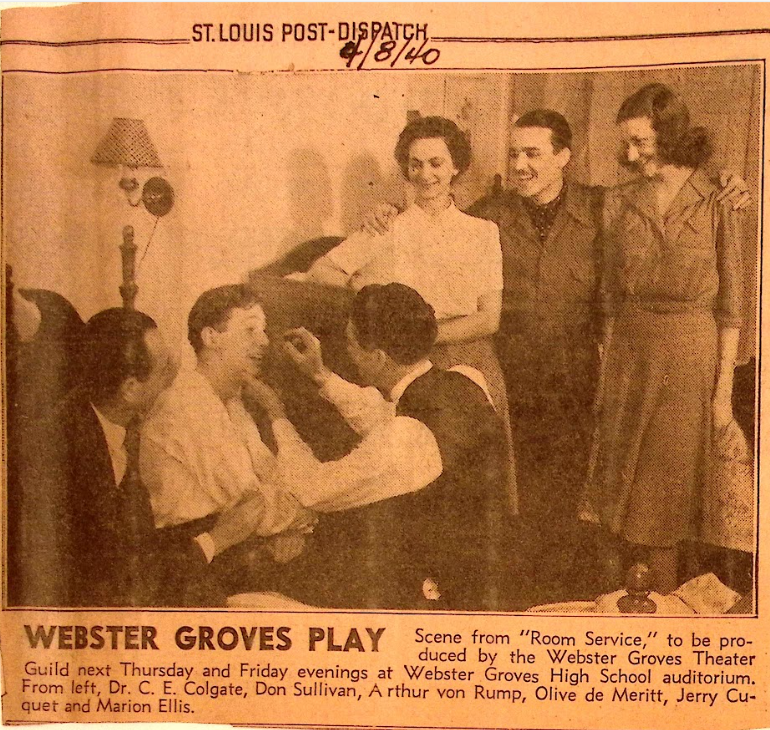
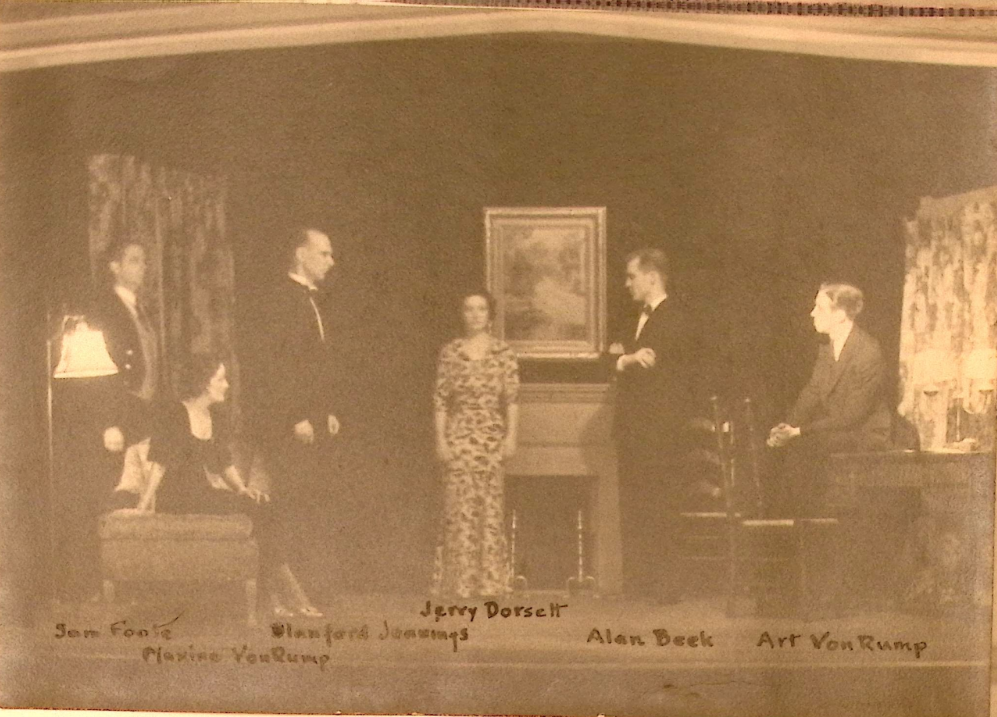
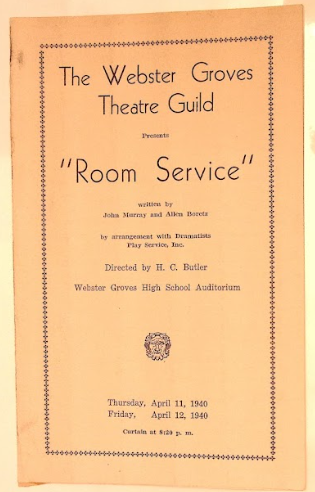
The Theatre Guild of Webster Groves began with conversations among a small group of local theatre enthusiasts in 1926. By the fall of 1927, some fifty people had gathered at First Congregational Church to formally establish the organization. Among its early leaders were Gordon Hall, Edwin C. Hyde, Irma Tucker, Frances Dewey, and Allan McMath.
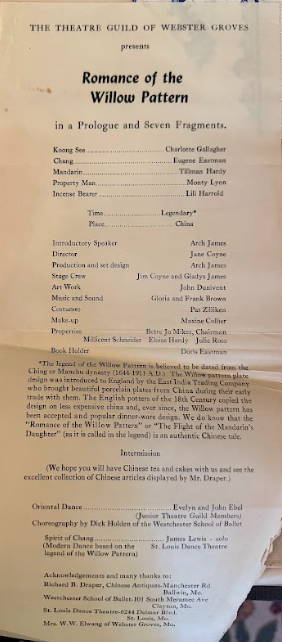
The new Guild wasted little time getting to work. By the winter of 1927–28, members were producing plays at First Congregational Church and Webster Groves High School. Without a permanent theatre, the company performed wherever space was available. During the Great Depression, The Monday Club of Webster Groves became an important home for Guild productions, while members rehearsed in private houses and found whatever space they could to store costumes, props, and scenery.
From the beginning, the Guild was interested in more than staging established plays. Its members also wanted to encourage new writing and provide opportunities for playwrights to see their work performed.
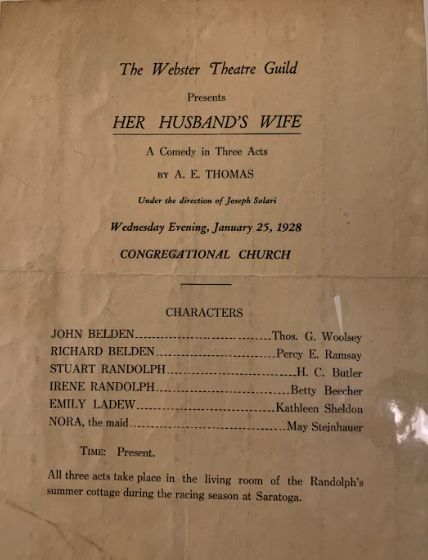
[Image Right: 1928 production program of Her Husband’s Wife]
Original One-Act Playwriting Contest (1931-1996)
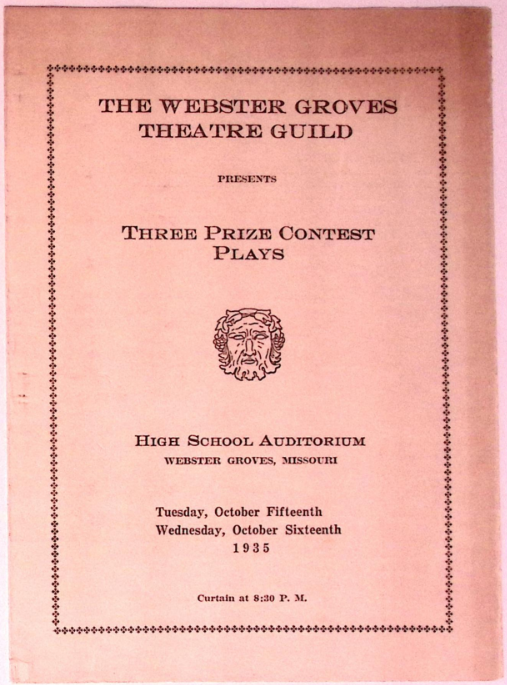
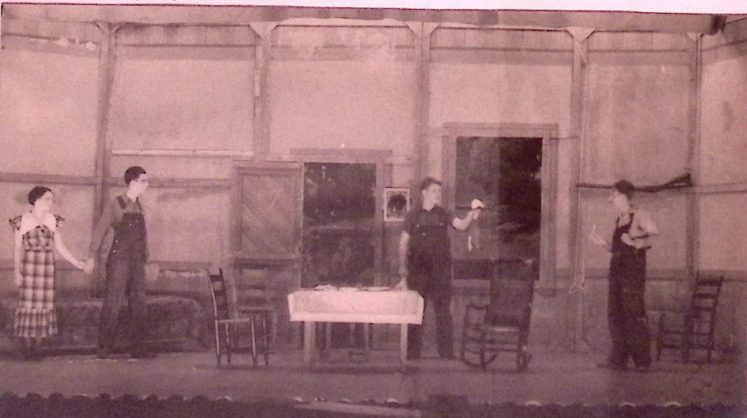
In the early 1930s, the Guild established an original one-act playwriting contest that would become one of its longest-running traditions. What began as a local competition eventually attracted submissions from playwrights across the United States and abroad.
The contest gave emerging writers an opportunity to have their work recognized and produced, while introducing Guild audiences to new plays and voices. It was later renamed the Russell Sharp Drama Fair in honor of longtime member Russell A. Sharp, whose contributions helped shape the organization.
For decades, the competition remained an important part of the Guild’s commitment to developing new theatrical work.
[Image Left: 1935 One-Act Playwriting Contest]
Tennessee Williams and The Magic Tower (1936)
Among the playwrights who submitted work to the Guild’s competition was a young Washington University student named Tom Williams.
In 1936, contest chairman Mary Gaylord Cobb wrote to Williams to inform him that his one-act play, The Magic Tower, had unanimously won first prize. The Guild produced the play that October under the direction of David Gibbs, and Williams attended the performance with his family.
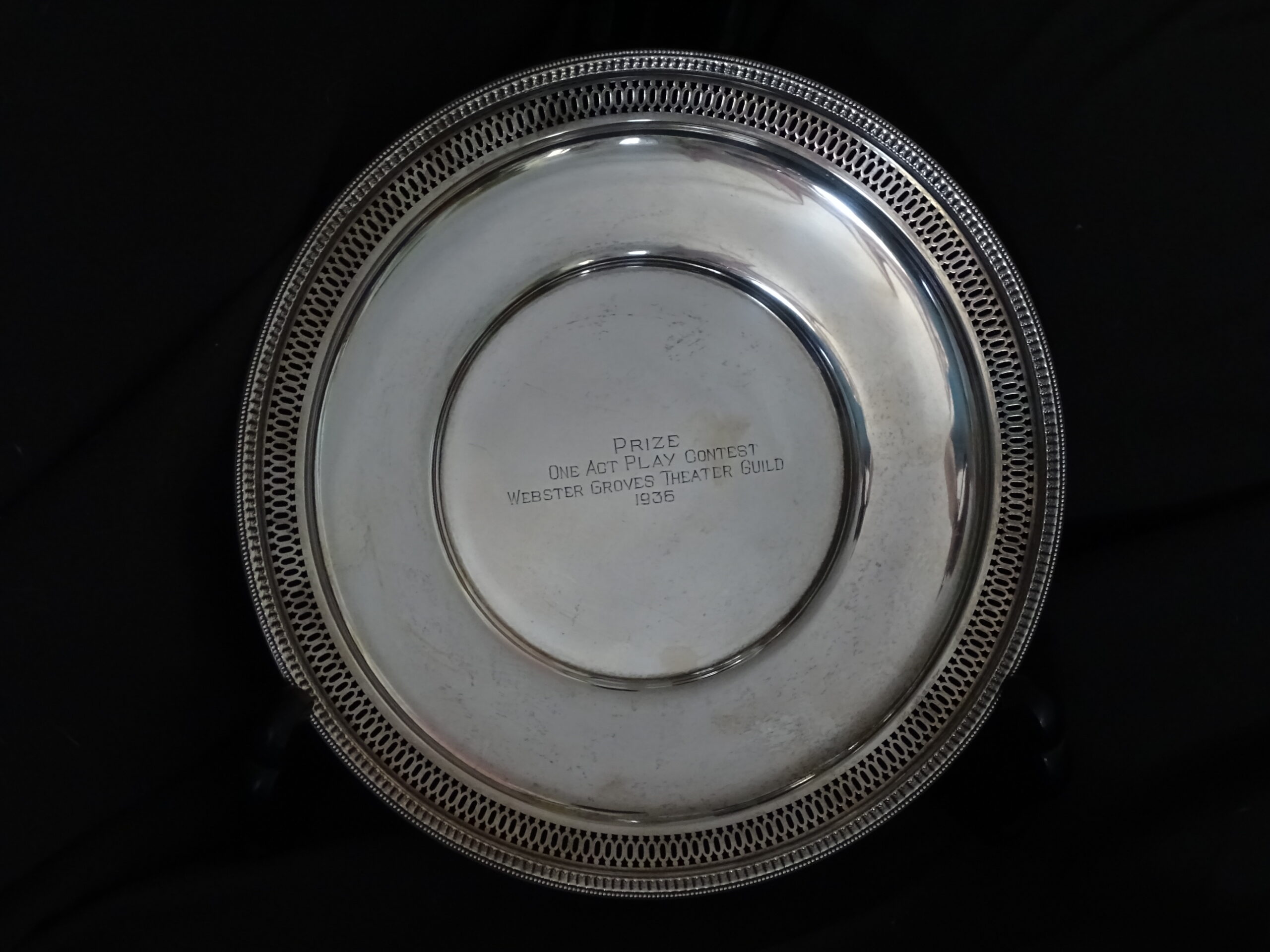
In recognition of his achievement, the Guild presented Williams with an engraved silver plate, a photograph of which survives in our archives.
Within a few years, Tom Williams would become known to the world as Tennessee Williams, author of The Glass Menagerie, A Streetcar Named Desire, and Cat on a Hot Tin Roof. His early connection to the Guild remains one of the most notable chapters in our history.
[Image Right: Engraved silver plate presented to Tennessee Williams in 1936]
Finding a Permanent Home (1951-1952)
For nearly twenty-five years, the Guild had operated without a theatre of its own. That changed in 1951, when the organization purchased the property at 517 Theatre Lane for $6,500.
The purchase followed negotiations with the property owner, neighbors, and the City of Webster Groves, led by Guild president Winston Littlefield and members including William Van Cleve and Marilyn Richardson.
The building already had a history of its own. Constructed in 1909 as Kate Mulroy’s Suburban School of Music, it originally welcomed students who arrived by streetcar along Summit Avenue for music and dancing lessons. A second-floor performance hall was added soon afterward, and the building went on to host recitals, dances, church services, and community gatherings.
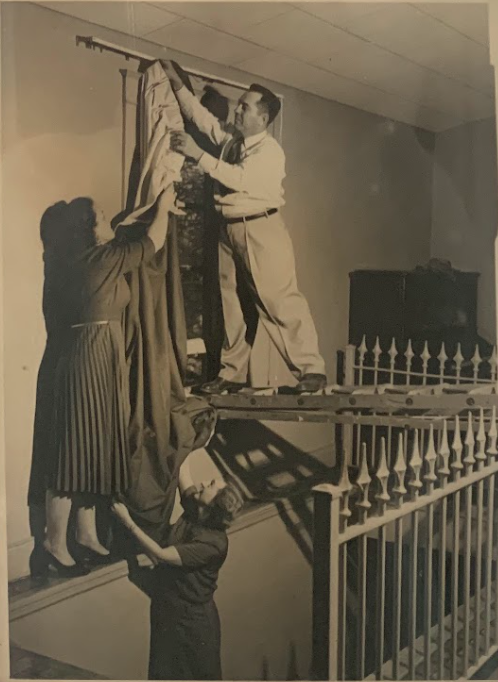
Converting the aging property into a working theatre required considerable effort from Guild members, who took on much of the renovation themselves. The Guild opened its new home in 1952, finally giving the organization a permanent place to rehearse, perform, and gather.
More than seventy years later, 517 Theatre Lane remains our home.
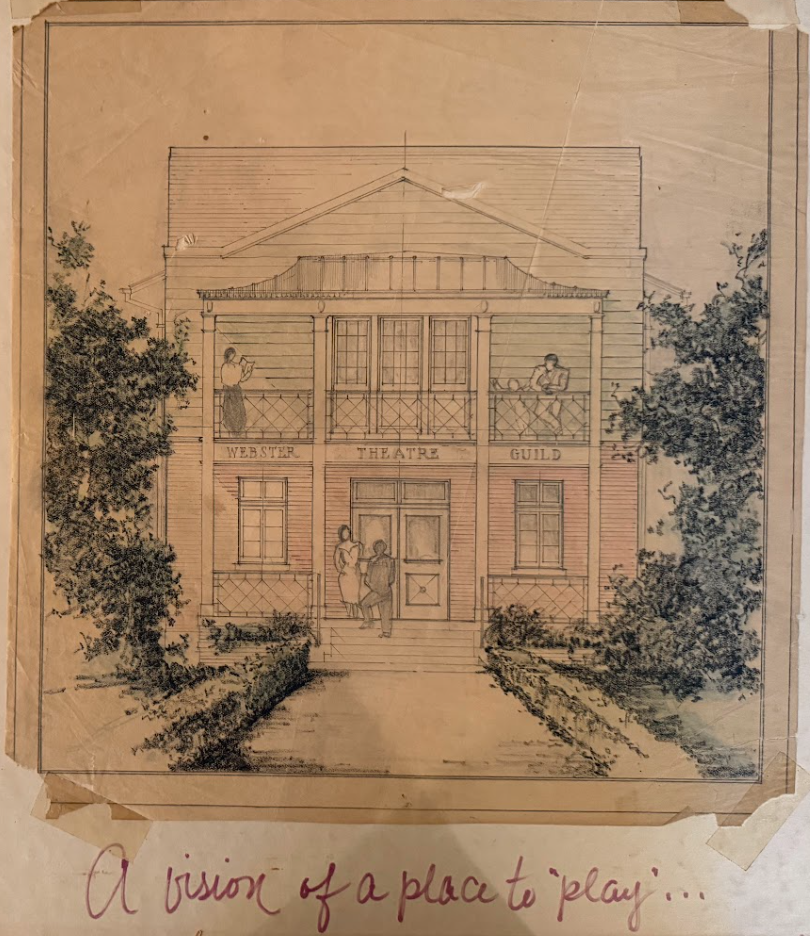
[Image Left: The Guild building in the 1950s]
A Growing Theatre Community (1950s)
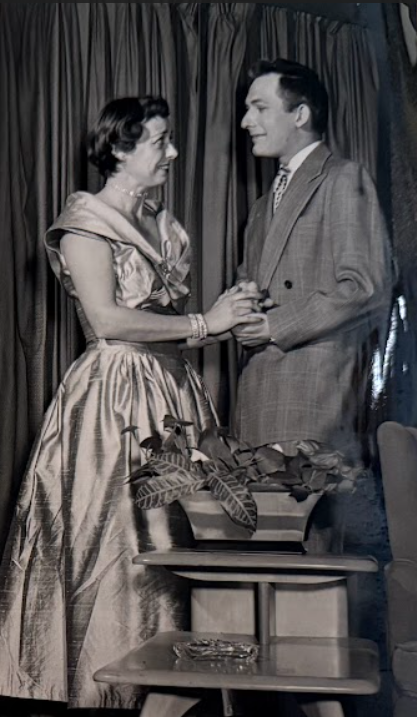
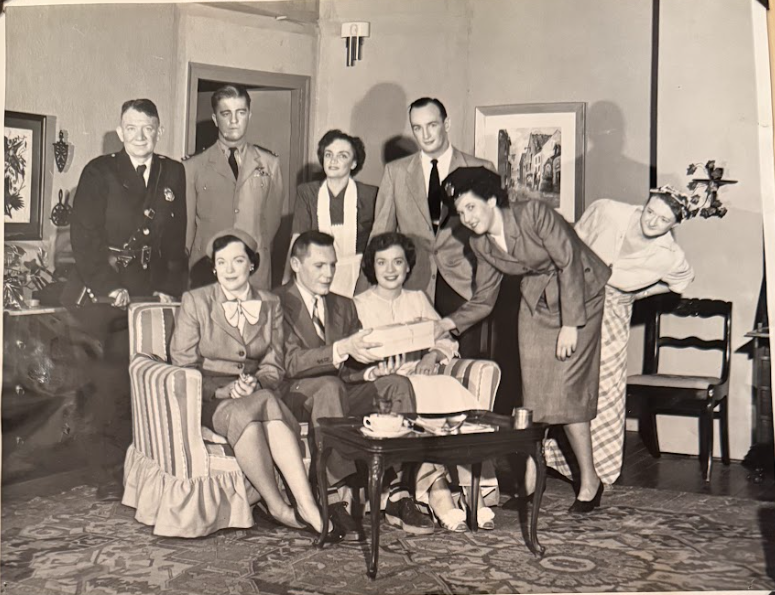
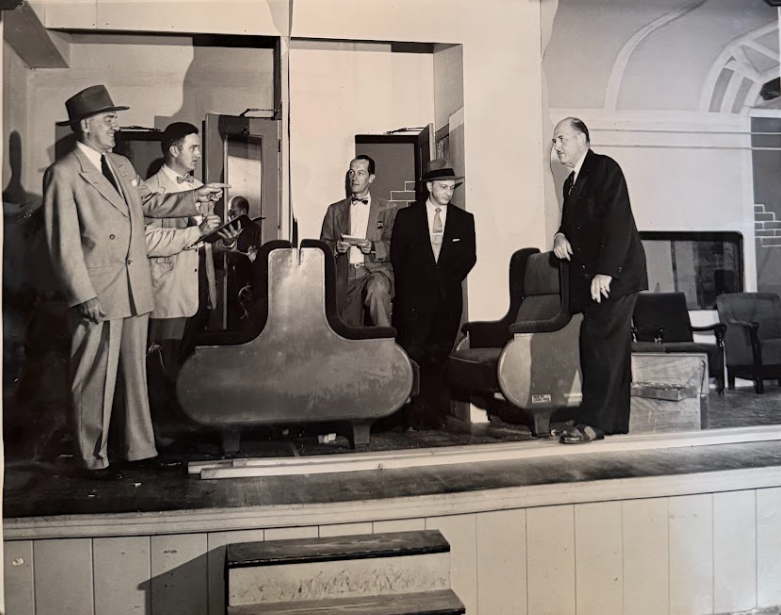
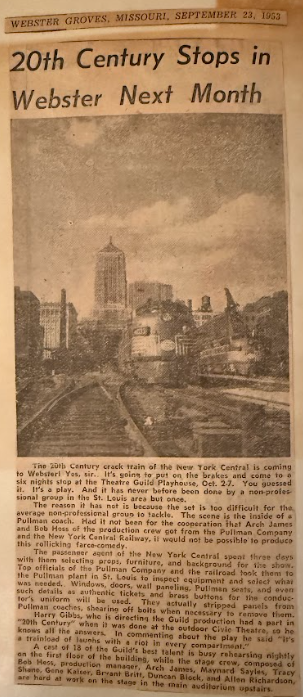
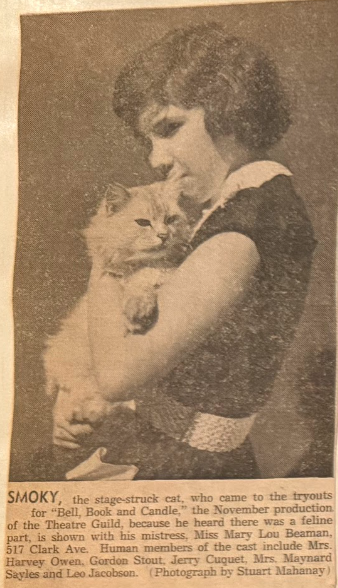
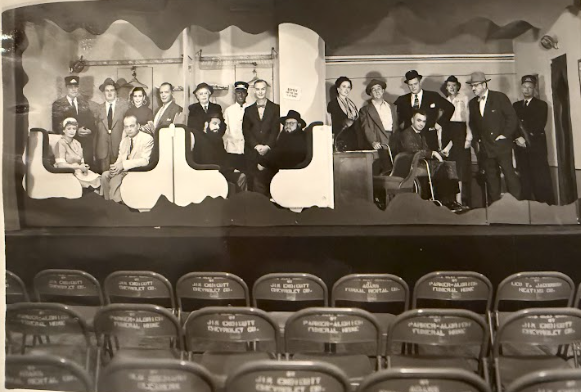
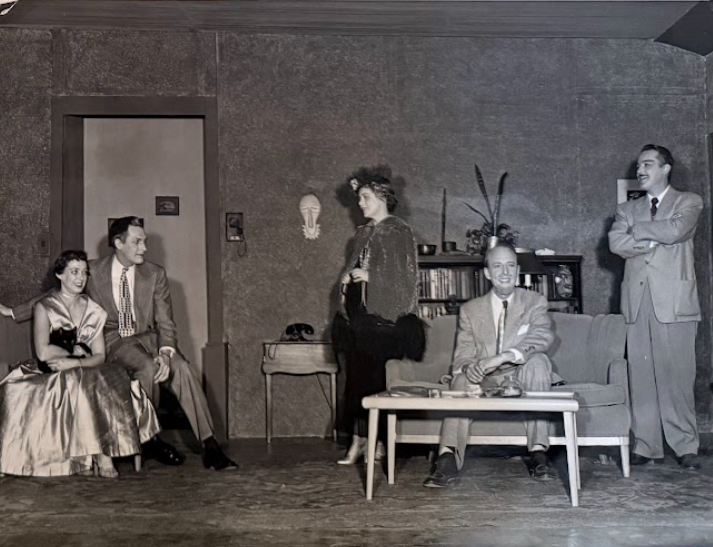
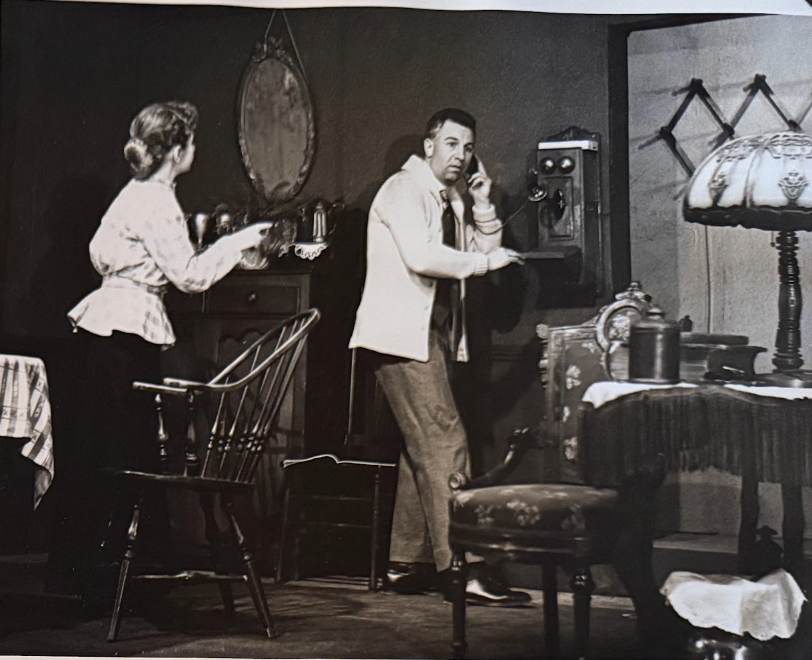
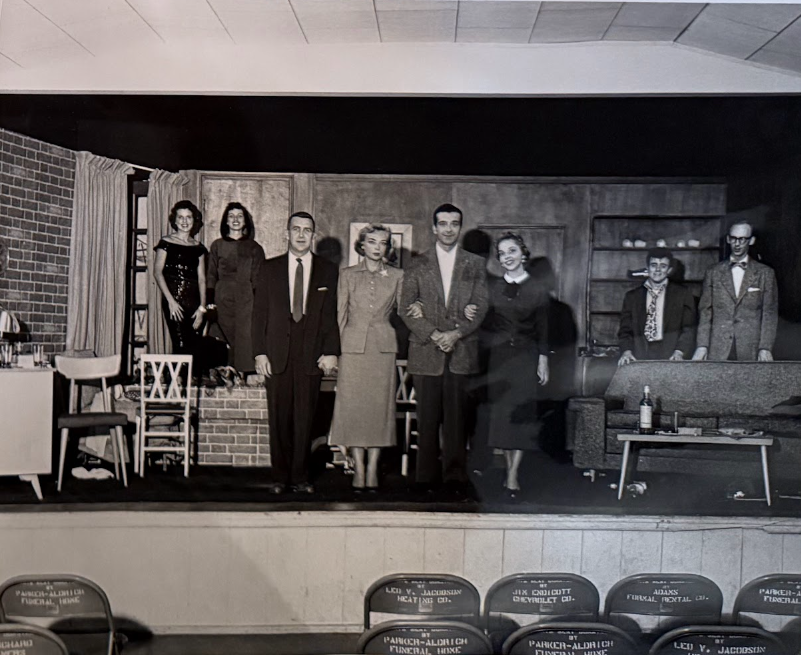
The move to Theatre Lane ushered in a period of tremendous growth for the Guild. By late 1953, Guild records reported approximately 1,300 members, including adults, young people, and business sponsors. Productions sometimes ran for an entire week, and the organization’s activities extended well beyond the stage.
One of the prominent figures of this period was Harry C. Gibbs, who directed major Guild productions in the early 1950s. Gibbs was also familiar to St. Louis television audiences as “Texas Bruce,” host of the popular children’s program Wrangler’s Club. He contributed a regular column, “Gibb’s Gabs,” to the Guild’s newsletter.
The Guild also participated in charitable activities and supported young performers through awards for theatre students at Webster Groves High School.
The Ghosts of the Guild
A building that has stood for more than a century is bound to collect a few stories, and 517 Theatre Lane has more than its share.
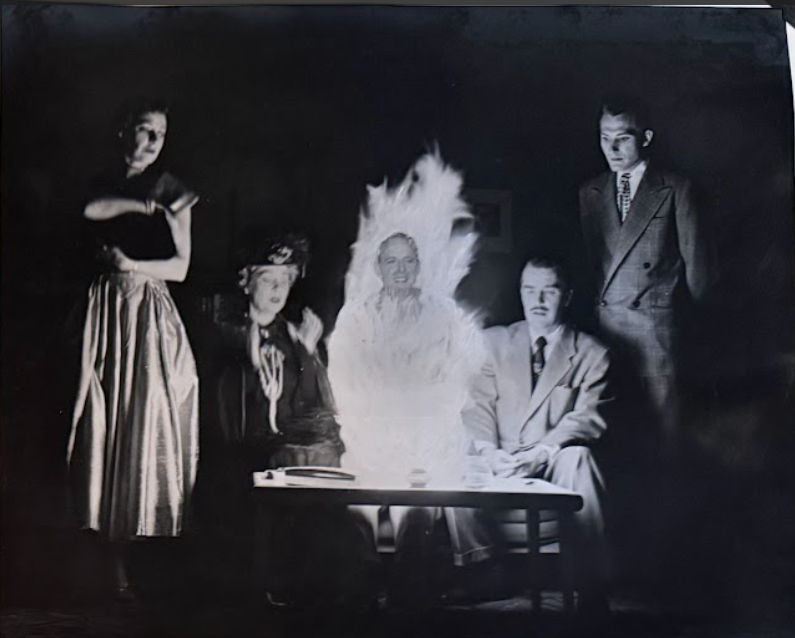
Over the years, Guild members and visitors have reported unexplained footsteps, voices, apparitions, and other unusual experiences throughout the building. Whether these stories have supernatural explanations or simply belong to the folklore of an old theatre is open to interpretation, but they have become a familiar part of Guild life.
The building’s reputation has attracted the attention of paranormal investigators, including Ghost Research Society, and earned it an entire chapter in Patrick Dorsey’s 2015 book, Haunted Webster Groves.
We can’t say for certain who, if anyone, is still hanging around after the curtain falls. But after a hundred years of performances, rehearsals, and late nights in the theatre, perhaps it isn’t surprising that some people are reluctant to leave.
Preserving Our History
Much of what we know about the Guild’s history survives because generations of members took the time to document it.
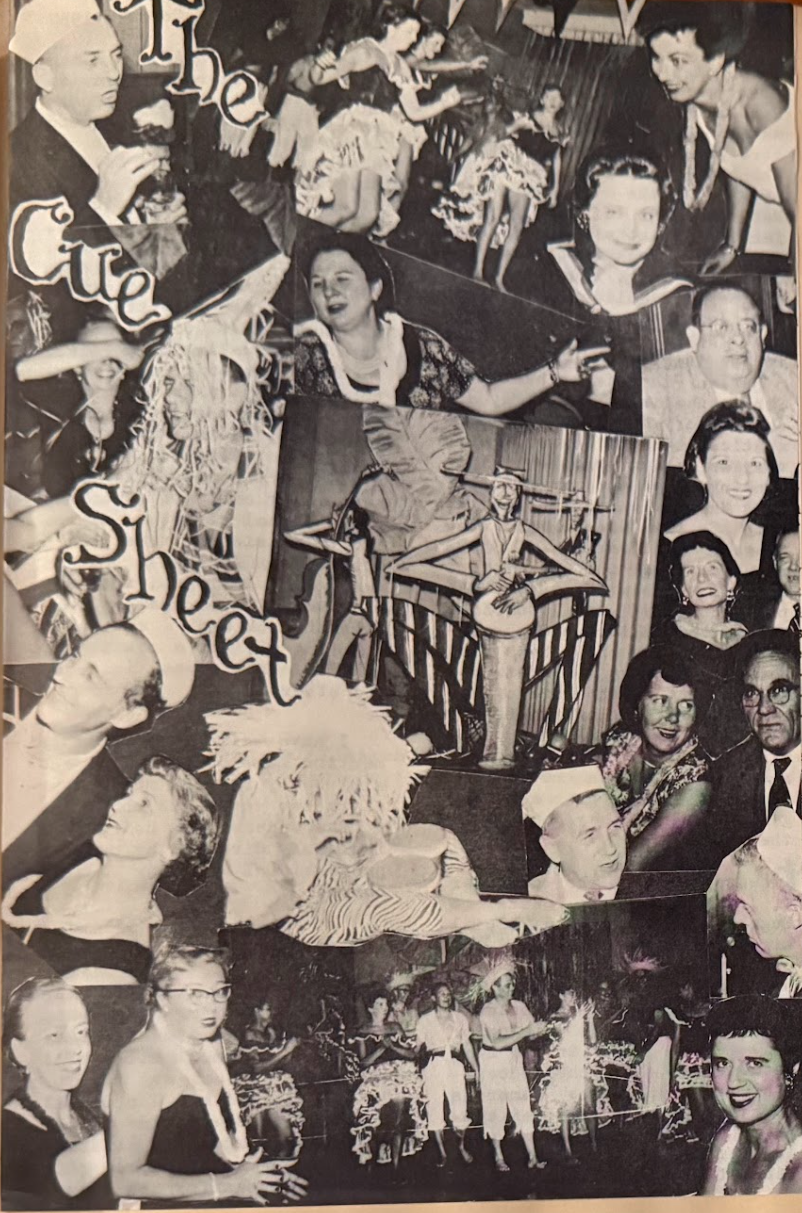
For approximately ninety years, the Guild published The Cue Sheet, a newsletter that recorded productions, announcements, volunteer opportunities, and the everyday business of running a community theatre. Surviving issues date back at least to the 1930s, offering a detailed record of the people and activities that shaped the organization.
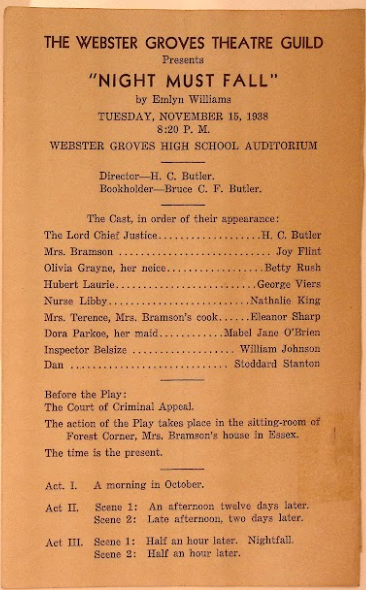
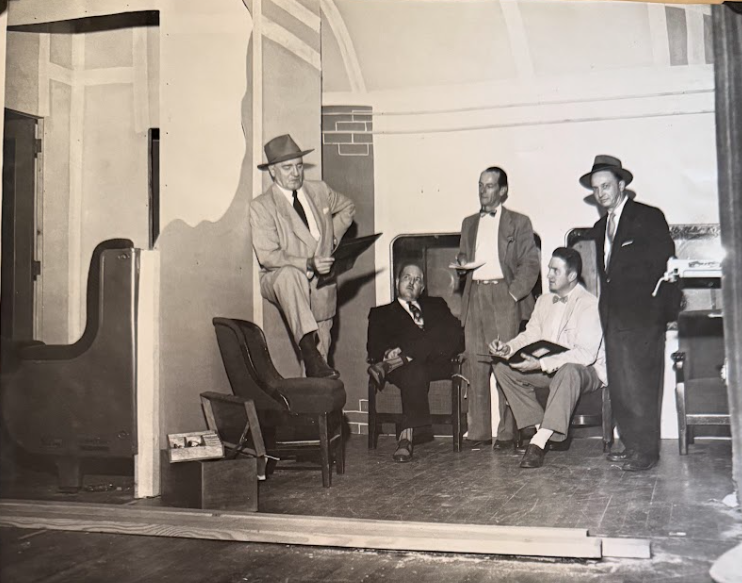
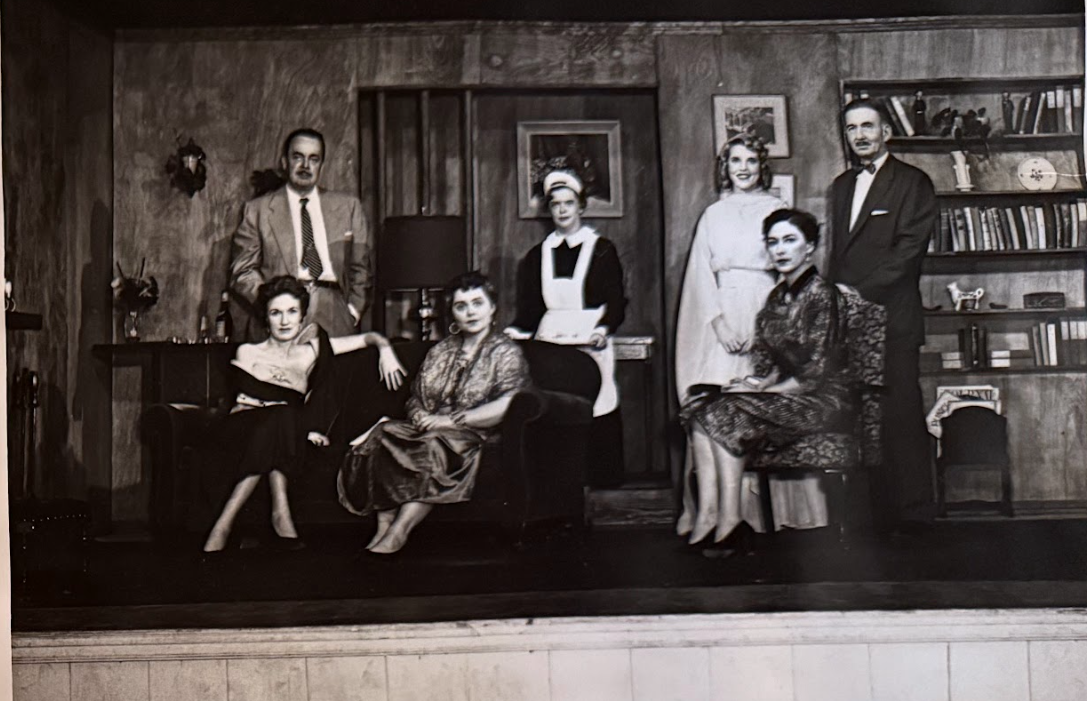
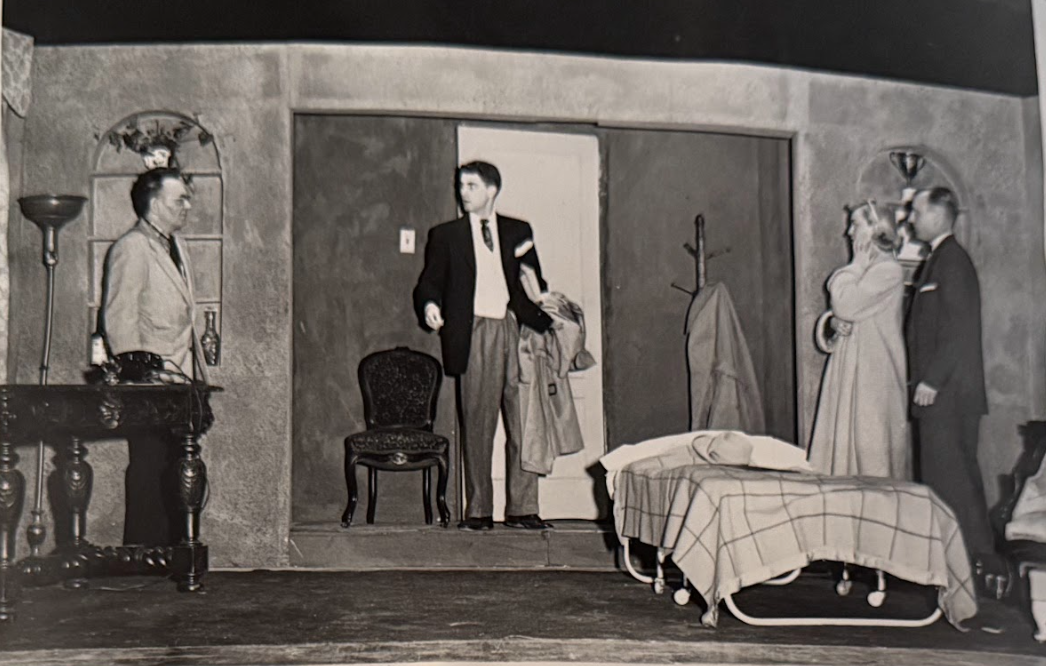
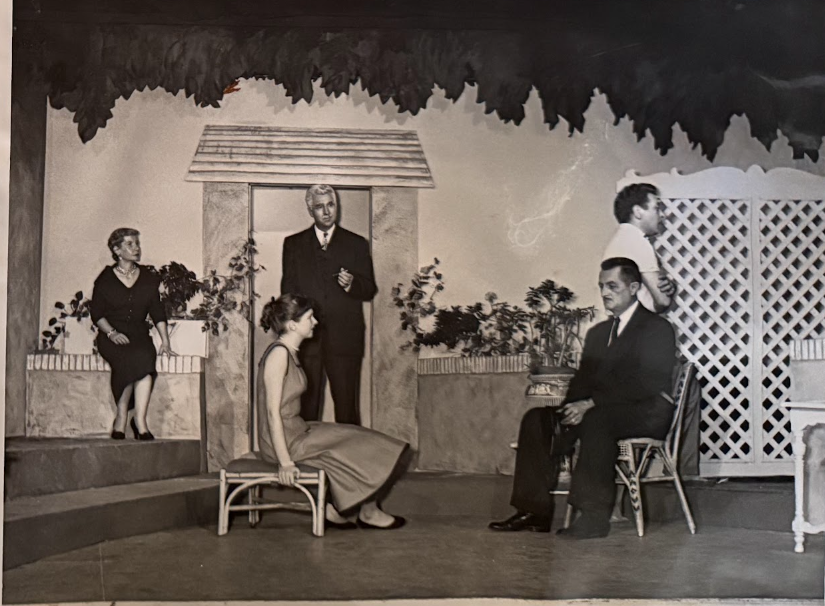
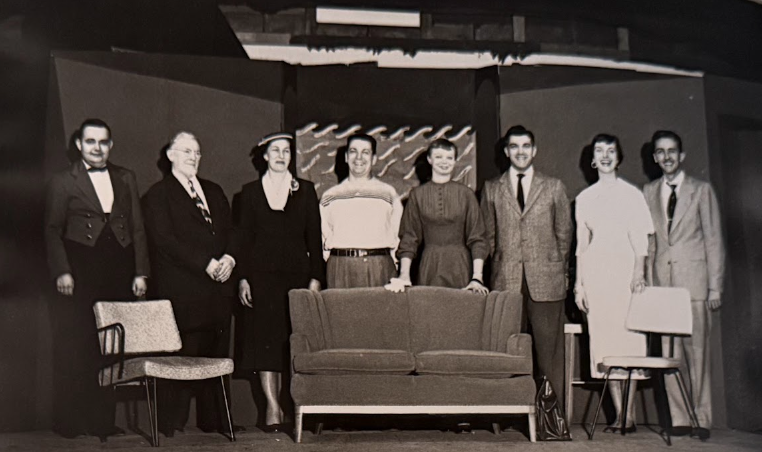
Our archives also contain photographs, programs, scrapbooks, correspondence, and other materials documenting nearly a century of theatrical activity in Webster Groves.
That history is visible throughout the theatre itself. Photographs lining the lobby walls commemorate productions from 1952 through 2002. Engraved bricks on the patio recognize supporters, while dedicated seats in the auditorium honor members whose contributions helped sustain the Guild.
In 2013, the City of Webster Groves formally designated 517 Theatre Lane a City Landmark, recognizing the building’s architectural and historical significance.
The Guild Today
As we celebrate our 100th season in 2026–2027, the Theatre Guild of Webster Groves remains an entirely volunteer-run community theatre.
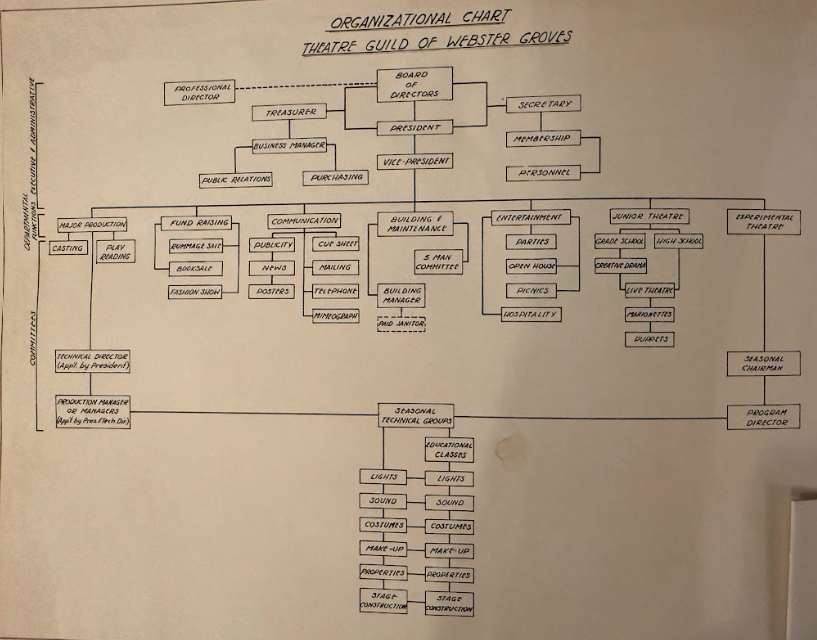
Each season, the Guild produces five mainstage shows, with volunteers responsible for nearly every aspect of the organization. They select plays, direct and perform, build sets, create costumes, operate lights and sound, manage the building, welcome audiences, and serve on the Board of Directors.
A century of community theatre represents thousands of people giving their time and talents to something they believe in. Some stayed for a single production. Others spent decades here. Together, they built an organization that has outlasted generations of change in both theatre and the community around it.
As we begin our second century, we are grateful to everyone who helped bring us this far, and look forward to welcoming the artists, volunteers, and audiences who will write the next chapters of our history.
Land Acknowledgement
We acknowledge that the land on which we gather, in what is now known as Webster Groves, Missouri, is the ancestral and unceded territory of the Osage Nation, the Illini Confederacy, the Missouria, and other Indigenous Peoples who have stewarded this region for generations.
We recognize and honor their enduring relationship to this land—past, present, and future—and we express our respect for their cultural heritage, resilience, and ongoing contributions. We also acknowledge the painful history of forced removal and colonization that displaced Native communities from their homelands.